
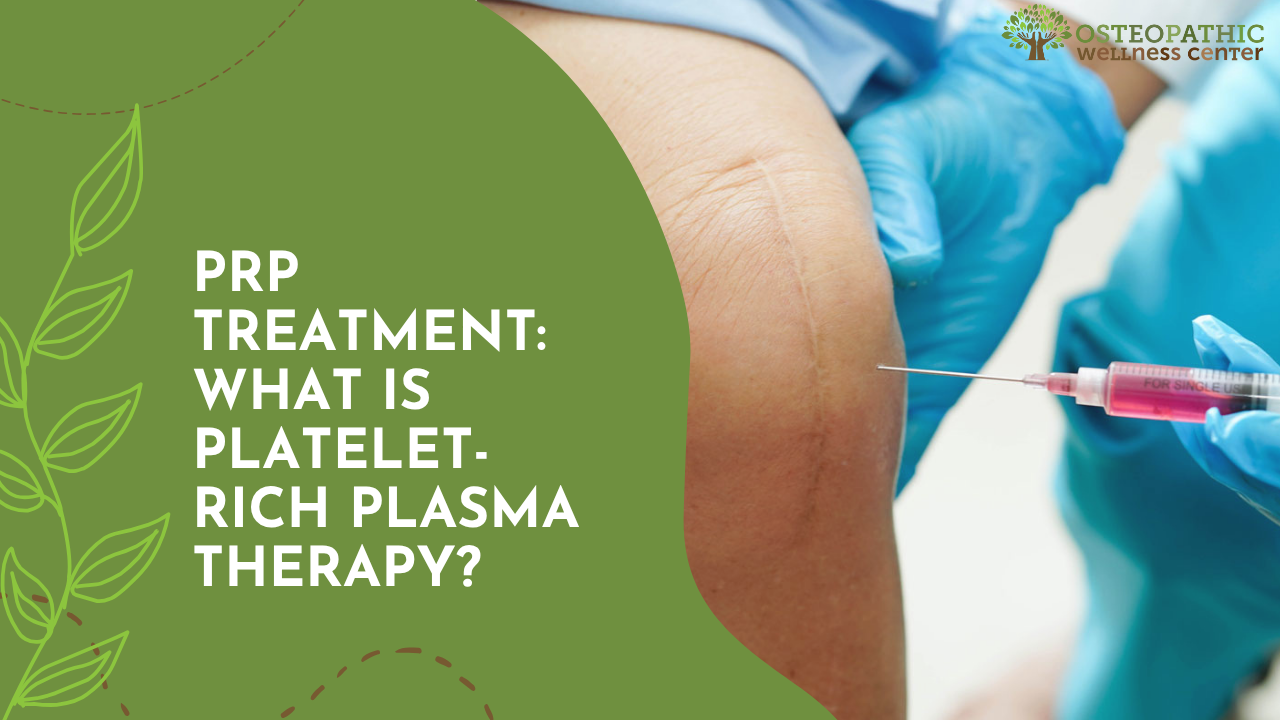
Platelet-Rich Plasma (PRP) therapy is a treatment that uses a patient’s own blood, processed to concentrate platelets, and then injected into targeted areas to promote healing and tissue repair. It’s commonly used for injuries, joint pain, hair restoration, and skin rejuvenation.
In the event of recurrent pain or an injury that lingers, platelet-rich plasma (PRP) therapy is absolutely worth considering. We prepare it from your own blood and inject it directly into the spot your body needs help. By concentrating platelets and their growth factors, PRP accelerates local healing and calms irritation without the necessity of surgery.
At the Osteopathic Wellness Center of Ridgefield, CT, our practice always starts with clear diagnosis and first-order appropriate choices. This handbook walks you step for step through PRP–that is, what it is, when it works, when it doesn’t, and where the evidence gets muddled–and how the process works from your end.
How PRP Works (In Plain English)
We take only a very small sampling of your blood and spin it in a machine called a centrifuge to obtain a higher-than-normal concentration of platelets. That preparation is injected into the spot of concern, generally with ultrasound assistance, so that we are precise. Platelets contain natural messages that will stimulate the body’s repair system. Whether or not it works is dependent on the disease that we are treating, how your PRP is constructed, and our technique.
When We Consider PRP Treatment
Tendinopathies: PRP’s area of greatest effectiveness
For long-standing tendon pain, for instance, tennis elbow or certain patellar and Achilles difficulties, PRP treatment will at times be considered. Steroid injections will sometimes feel great for the first few weeks, but the relief from pain may fade. PRP will at times take longer to initiate treatment, but its benefits may last longer for the right tendon issue. We can talk more about which group your tendon sits in.
Knee osteoarthritis: few benefits, inconclusive overall
For mild-to-moderate knee arthritis, pain and function improve for several months for most people after PRP. The evidence for this is inconclusive as studies vary in their application of PRP. That’s why, with your goals, your daily life, and informed expectations, and with shared decision-making, we decide if PRP therapy has any role in your plan.
Other injuries: on a case-by-case basis
Muscle strains, ligament sprains, and support after surgery are all being researched. Sometimes PRP therapy works; sometimes it doesn’t. We will tell you straight out what our opinion is, and why.
Bottom line: One size doesn’t fit all. The best outcome occurs when the correct issue, on the correct patient, receives the correct protocol.
PRP and Autoimmune/Inflammation Questions
They will occasionally question if PRP will lower overall inflammation or treat autoimmune disease. PRP has localized effects at the injection site; PRP is not a bodywide therapy for autoimmune disease. If PRP therapy and osteopathic care are of interest, clear objectives will be defined and coordination with your other healthcare providers will occur.
After PRP Treatment: What Can You Expect?
Right After the Injection
It is not unusual to have a mild pain or have a “full” for a few days. Daily walking and usual activities are usually fine. Everyone seems to do better, slowly returning to movement, as opposed to coming to a standstill.
First few days: Light Activity
Keep it basic. Focus on easy motion and short moments of movement. We’ll give you an easy schedule so the area gets protected while your body makes initial repair.
What Not to Wait For & Pain Relief
Do not run, jump, lift heavily, or stretch deeply on the exact site of injury until we permit it. Do not use non-selective NSAIDS close to PRP treatment; they inhibit platelet function. For pain, we will recommend substitutes; acetaminophen is usually given.
Regular Recovery Schedule
Tendons usually change for the better over weeks as we apply the right kind of loading. Knees and other joints typically recover in 4–12 weeks, and the benefits last for 3–6 months. We will advance your activity so that improvements remain.
Next Steps and Follow-ups
We’ll check in, observe your function, and tailor the plan. Some patients do well with one PRP treatment as an initial treatment, and others do well with a short series spaced very far apart. Our aim is slow progression back to the activities that you want to resume.
Safety and Who Should Avoid PRP
Since PRP is from your own body, serious reactions are not common. Mild swelling and pain are normal; infection or nerve injury is rare. We generally do not perform PRP if there is an active infection, a certain disease of the blood, or injections near existing cancer. We will talk with you and make a safe decision regarding your health.
Medication note: For PRP treatment, we usually do not use aspirin or non-selective NSAIDs. COX-2–selective agents may be less disruptive of platelets. Pain control for your case will be recommended by your doctor.
Insurance and Cost
PRP treatment coverage is low with the majority of plans. We will discuss options and any out-of-pocket costs with you before your decision, so there are no surprises.
Is PRP Right for You?
You might be the perfect patient for PRP therapy if you possess a clear, image-verified diagnosis of an entity such as chronic tennis elbow, if rehabilitation and activity alterations have not worked out, and if you are willing to try a minimally invasive biologic remedy with focused rehabilitation and osteopathic treatment.
If considering learning if PRP therapy might suit your diagnosis and goals, contact us at Osteopathic Wellness Center. We will assess your case, outline your options, and help guide you toward choosing an option that will suit your lifestyle.
FAQs on PRP Treatment
How many PRP sessions will I need?
It will vary with how the body and condition react to the injection. The plans typically use 1-3 treatments every few weeks apart.
How soon will I notice any change?
Tendons will get better over several weeks. Joints will get better at 4-12 weeks with continued improvements at 3-6 months if PRP works.
Will PRP help knee arthritis?
It can help some people with mild-moderate knee arthritis, mostly for pain and function. Results vary from person to person because PRP isn’t prepared the same way in every study or clinic. We’ll decide together if it’s a good fit.
What should I avoid after PRP?
Keep activity light for the first few days and avoid non-selective NSAIDs unless your doctor tells you otherwise. We’ll give you a simple plan for the first few days and how to build from there.
Is PRP FDA-approved?
Devices that prepare PRP are FDA-cleared. Using PRP injections for specific conditions is generally off-label in the United States, which is common for many procedures.